Repeating, Modifying and Inverting Relationships in Generative Music
How Do You Repeat Musical Ideas When Everything Is Random?
Repeating, Modifying and Inverting Relationships in Generative Music
Traditional composition relies heavily on repetition and variation.
Generative music raises an interesting question:
How can something be repeated when everything is changing?
The Answer: Repeat Relationships
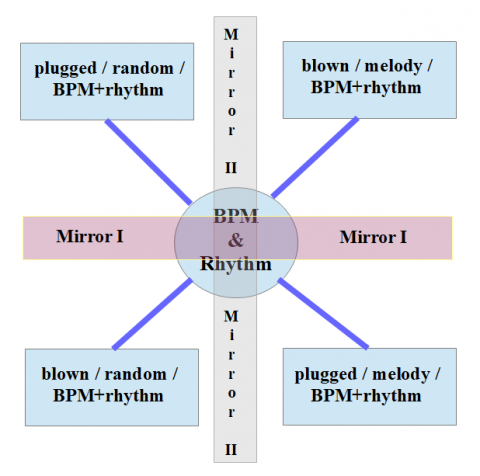
Instead of repeating individual notes, rhythms, or timbres, generative music often repeats relationships between parameters.
A musical moment is defined by a combination of characteristics.
These relationships can return later, even if every individual detail has changed.
Modification
A repeated relationship does not need to remain identical.
Its components may evolve while preserving their overall interaction.
The listener recognizes the underlying character rather than the exact details.
Inversion
Relationships can also be inverted.
For example:
High pitches become low pitches
Random movement becomes melodic movement
- Short envelopes become long envelopes
The resulting moment feels related while simultaneously transformed.
Thinking Beyond Notes
Generative composition encourages composers to think in terms of systems and behaviours rather than isolated musical events.
Conclusion
Repeating relationships rather than individual events allows generative music to retain coherence while embracing change.
Just click here to get more details about this topic, including graphs, presets, patches and videos.