The Inheritance of Randomness: Cascading Sample & Hold Modules
What Happens When One Sample & Hold Module Triggers Another?
The Inheritance of Randomness: Cascading Sample & Hold Modules
Randomness can be passed from one module to another.
This creates a hierarchy of random behaviour.
The Principle
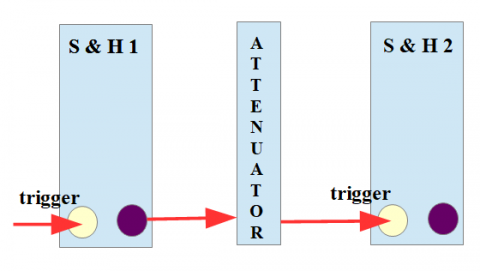
One Sample & Hold module influences the triggering of a second Sample & Hold module.
Because the first module produces varying voltages, the second module receives triggers only some of the time.
The result is randomness that occurs at random moments.
Why It Feels Different
Traditional Sample & Hold patches produce random values at regular intervals.
This method creates irregular intervals.
The timing itself becomes random.
Controlling Activity
An attenuator between the modules determines how often the second Sample & Hold reaches its trigger threshold.
This allows control over:
Fast random activity
Slow random activity
- Intermediate behaviours
Musical Applications
This technique is useful for:
Evolving melodies
Sparse ambient structures
- Slowly changing modulation networks
Conclusion
Cascading Sample & Hold modules creates a deeper level of unpredictability by making random events occur at random times.
Just click here to get more details about this topic, including graphs, presets, patches and videos.