Synchronizing Random Events to a Beat
How Can Random Melodies and Random Drums Share the Same Rhythm?
Synchronizing Random Events to a Beat
Random events do not automatically create coherent rhythm.
In many situations they need to be synchronized to a common timing structure.
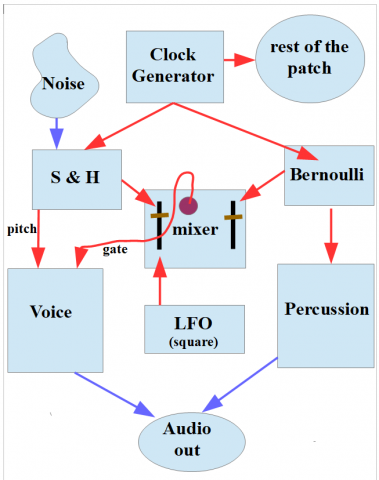
Two Independent Random Processes
The chapter presents an example involving:
a Sample & Hold generating random pitches,
- a Bernoulli Gate generating random percussion triggers.
Although both processes contain randomness, they can still share a common rhythmic foundation.
Creating Coincidences
A useful technique involves combining trigger sources with a CV mixer.
This allows different rhythmic processes to occasionally reinforce one another.
The listener hears moments where melody and percussion suddenly align.
Controlled Unpredictability
The goal is not perfect synchronization.
Instead, the goal is increasing the probability that independent processes occasionally meet on important beats.
Conclusion
Synchronizing random events creates a balance between independence and coherence, a central characteristic of many successful generative systems.
Just click here to get more details about this topic, including graphs, presets, patches and videos.