Random Trigger Sequencers and Adjustable Randomness
How Do Random Trigger Sequencers Control the Amount of Randomness?
Random Trigger Sequencers and Adjustable Randomness
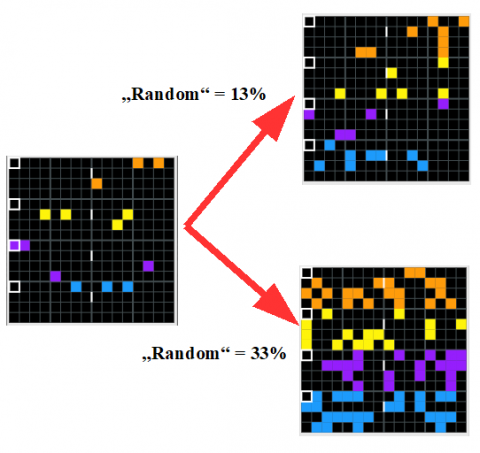
Many modern trigger sequencers allow patterns to change automatically.
Instead of manually programming every event, the module generates new trigger distributions according to a user-defined amount of randomness.
Different Definitions of Randomness
Not all random trigger sequencers interpret randomness in the same way.
Some choose between predefined patterns.
Others modify an existing pattern.
Still others generate completely new trigger positions whenever a pattern changes.
Understanding these differences is more important than understanding any particular module.
Pattern Length and Trigger Density
Many modules allow control over:
sequence length,
number of active triggers,
- when pattern regeneration occurs.
The relationship between these parameters determines the resulting musical behaviour.
Randomness as a Compositional Tool
A useful perspective is to treat randomness not as chaos but as controlled variation.
The composer decides:
when patterns change,
how often they change,
- how dense they become.
The module supplies the details.
Conclusion
Random trigger sequencers provide a practical way to generate evolving rhythmic structures while preserving a desired degree of control over the overall musical result.
Just click here to get more details about this topic, including graphs, presets, patches and videos.