Euclidean Sequencers: Controlled Irregularity in Generative Music
How Do Euclidean Sequencers Create Complex Rhythms?
Euclidean Sequencers: Controlled Irregularity in Generative Music
Euclidean sequencers occupy an interesting position between order and apparent randomness.
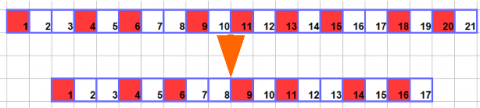
They do not generate random patterns at all. Instead, they distribute events as evenly as possible across a sequence.
Yet the resulting rhythms often feel surprisingly organic and unpredictable.
The Core Idea
Imagine a sequence of ten steps.
If three trigger events must be distributed as evenly as possible, a Euclidean algorithm places them at positions that maximize spacing.
This principle applies regardless of sequence length.
Why Euclidean Patterns Feel Natural
Because events are distributed evenly, Euclidean rhythms often resemble traditional hand-played percussion patterns.
The book specifically notes that percussion applications quickly enter the world of African rhythm traditions.
Where the Generative Potential Begins
The real generative power appears when sequence length and event density become modulation targets.
Changing these parameters continuously reshapes the resulting rhythm.
The pattern remains mathematically ordered, yet its musical behaviour becomes increasingly unpredictable.
Not Random—but Useful
Euclidean sequencers are excellent examples of how generative music does not necessarily require randomness.
Complexity can emerge from deterministic rules.
Conclusion
Euclidean sequencers transform simple mathematical distribution into musically compelling rhythmic structures. When their parameters are modulated, they become powerful engines for evolving rhythmic behaviour.
Just click here to get more details about this topic, including graphs, presets, patches and videos.